

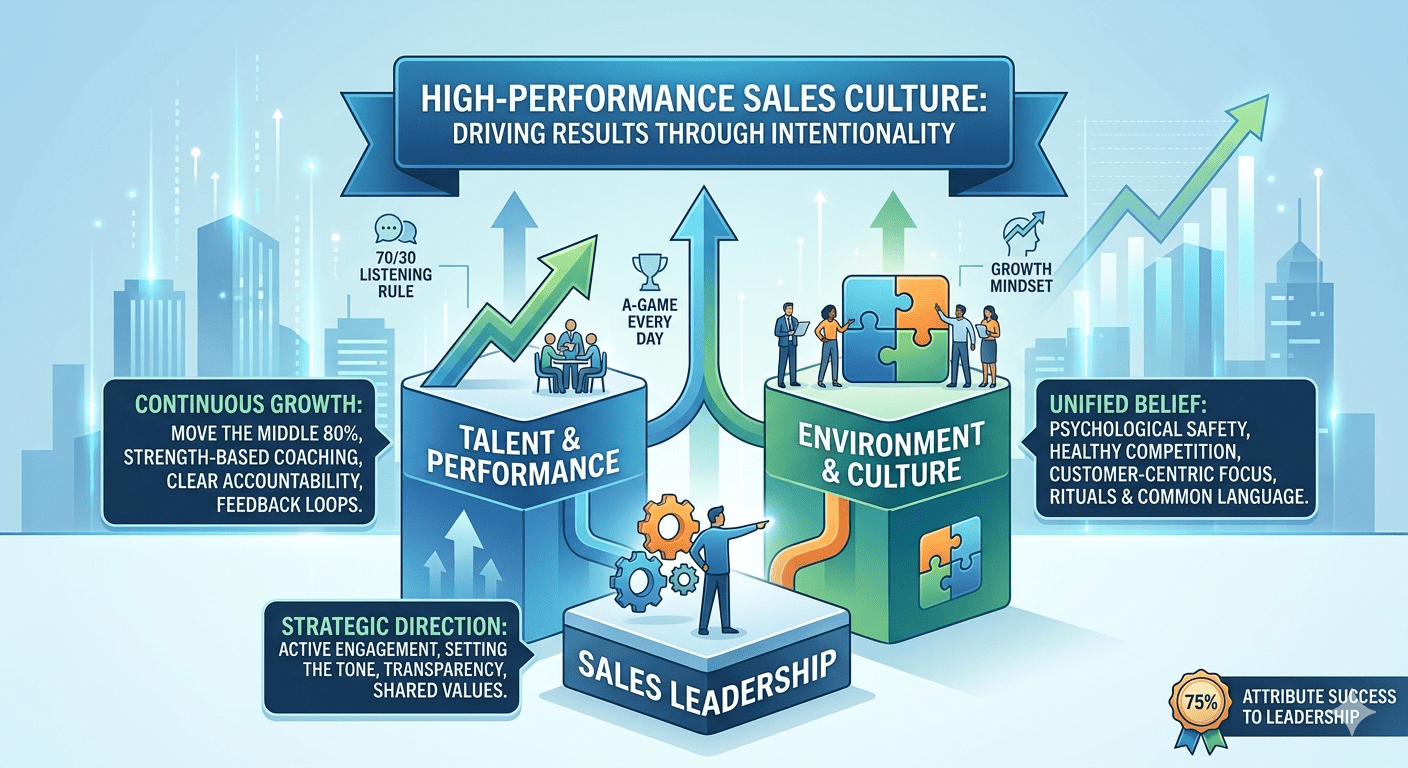
 We’re coming up upon mid-year. For many sales appear to be good. But are they?
Those who are benefiting from the data center boom, or perhaps an industrial project in their market, or are a beneficiary of the Iran War (oil and gas, defense industry) or are selling much wire (given the almost $7 price of copper … did I really write $7?!) are reporting growth.
Stripe out that data and how is the rest of your team? Your accounts?
I was talking to a distributor the other day that is projecting a 20%+ increase this year. But they’ve identified a problem. Growth is being driven by their largest customers, all who are working on very large projects. The performance of their mid-size and small customers … not good.
And I bet if we analyzed their salespeople, either a few are the beneficiary of multiple large accounts and will make a gazillion dollars in commission or a number have one but have many accounts that are done … but they salespeople will earn half-a-gazillion as their comp is driven by the one “whale.”
The question becomes, what to do?
This article from GRN Coastal caught my attention. The focus is on how to support your underperformers. With the historical seasonality of the construction season here, now is the opportunity to act. There are six months remaining in the year. It is an opportunity to salvage it for all of your salespeople and have superior performance.
And this is true for distributors, reps, and manufacturers.
 Sales Performance is Not About Only Talent

“In wholesale distribution, sales performance has never been just about talent. It’s about the environment, expectations, and leadership. But today, those variables are harder to control. Teams are more spread out, time is limited, and many managers don’t have the bandwidth to formally train underperformers.
So, the default becomes: hire experience, expect results, and keep it moving.
But the managers who are consistently getting more out of their teams right now aren’t relying solely on experience—they’re creating conditions where performance becomes the natural outcome. This isn’t about overhauling your process. It’s about a few intentional shifts that can get your team moving again.
Start with Visibility, Not Pressure
When a salesperson is underperforming, the instinct is to push harder on results. But pressure without clarity rarely works.
Most struggling reps don’t lack awareness—they lack structure.
In a remote or territory-based role, it’s easy for activity to feel productive without actually driving results. Pipeline becomes unclear. Priorities blur. And without a clear standard, it’s difficult for reps to self-correct.
The strongest managers fix this by making performance visible:
- What does a healthy pipeline actually look like?
- What level of activity leads to results in your market?
- What should a “good week” consist of?
This doesn’t require micromanagement. It requires clarity.
When expectations are visible, performance becomes measurable—and improvement becomes more realistic.
Rebuild Momentum Before You Fix Everything
Underperformance is often treated like a skills issue. More often, it’s a momentum issue.
When reps fall behind, confidence drops quickly. Activity slows. Risk-taking disappears. They stick to what’s comfortable instead of pursuing growth.
Pushing harder on numbers at this stage usually backfires.
Instead, focus on rebuilding momentum:
- Re-engage a dormant account
- Target a smaller, quick-win opportunity
- Set a realistic weekly activity goal—and hit it
Small wins matter more than big expectations in the short term.
Once a rep starts seeing progress again, behavior changes. Activity increases. Confidence follows. And performance tends to correct faster than most managers expect.
Coaching Doesn’t Require Time—It Requires Intent
One of the biggest challenges managers face is time. Formal training often falls to the bottom of the list.
But development doesn’t have to be formal to be effective.
The best managers don’t rely on scheduled training sessions—they coach in real time:
- A quick conversation after a lost deal
- A five-minute strategy adjustment before a key call
- One piece of focused feedback instead of ten
These small moments are easier to deliver—and easier for reps to absorb.
Over time, they compound.
Instead of trying to fix everything at once, focus on one adjustment at a time. It’s more practical, and it leads to more consistent improvement.
Create Consistency to Build Culture
Culture used to be built in person. Now, it’s built through consistency.
If your only interaction with your team is tied to deals or end-of-month numbers, the environment becomes transactional. And transactional teams rarely outperform expectations.
Managers who are getting more out of their teams are creating consistent rhythms:
- A short weekly reset to align priorities
- Mid-week check-ins focused on progress and obstacles
- Quick recognition of wins as they happen
It’s not about adding meetings—it’s about creating touchpoints that keep people connected and aligned.
Consistency builds accountability. It also builds a sense of team—even when everyone is working different territories.
Encourage Team Thinking in an Individual Role
Sales will always have an individual component, but the strongest distribution teams don’t operate in silos.
They share information:
- What’s working in the field
- How competitors are pricing
- Where opportunities are opening up
In a remote environment, this doesn’t happen naturally. It has to be encouraged.
Creating space for collaboration—whether it’s a quick roundtable, a shared win breakdown, or open discussion—helps information move faster across the team.
That speed matters.
When one rep figures something out, the entire team should benefit from it.
Recap
Getting a sales team “in gear” isn’t about one big change. It’s about creating an environment where the right behaviors happen consistently.
When expectations are clear, activity is visible, coaching is ongoing, and communication is consistent, performance becomes more predictable.
And in today’s wholesale distribution market, that consistency is what separates average teams from high-performing ones.
Managers don’t need more time—they need a system that helps their people move.”
Thoughts
Aside from leadership, sales teams may need tools. Some tools support all. Some support some (and this is hard for companies to understand as they frequently say, “I’m investing in X, let’s give it to all.” But take a look at the second line in the graphic above … “through intentionality.”
If you want success, focus on where you need to focus, especially since you have limited resources, namely time, followed by people resources.
Some tools to consider:
- IDEA launched their Data Whispers tool a year or so ago. The wheels have been lubed and oiled with pilots that they have run, and the system is ready for prime-time. Give them a call to learn how this new tool, which is CRM-agnostic but also does not require a CRM system … only a cellphone … could help new and underperforming salespeople.
- Have you thought about how a target account sales incentive program could support your team … and perhaps target selected customers? Channel Marketing Group has experience in developing these types of programs for manufacturers and distributors.
- And sometimes your sales leadership, and sales team, need training. We know some that may be of assistance.
At the end of the day, you need to take the next 30 days to gather the troops and identify a plan to level up salespeople, support them, to enable them to capitalize on the second half of the year.
4 Comments

Wow! So many really good ideas in this article!! David, I’m glad I never had to compete with you!! Thank you for writing this!

Thanks Ernie, I appreciate it. We wouldn’t have needed to compete, I could have consulted for you! This is an example of how we help clients.

Excellent perspective, David! One point that especially resonated with me was the idea that performance improves when expectations, visibility, and actionable insights are clear.

David, very good information. This is the way we try to run our business. Keep everyone in the loop, cheer our individual and team wins as they happen.
Leave a Reply

Trending Now

Controlling Technology Expenses

What CEDIA Already Knows About Systems Delivery
You may also like


