


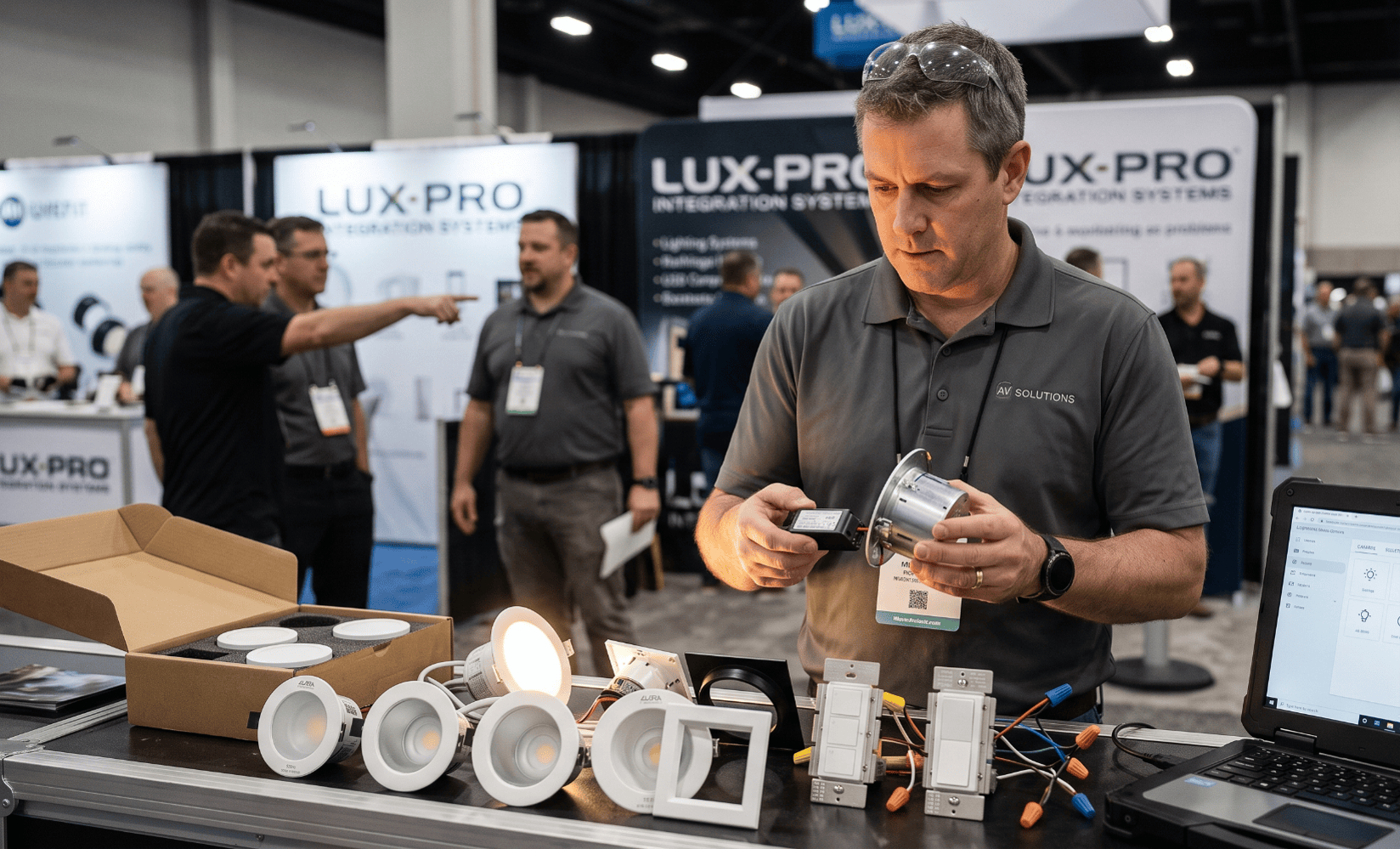
 So, you thought the lighting market was flat? It may be, however, the residential custom integration market seems to be alive and well.
In 2023, CEDIA conducted a study and estimated that this is a $30 billion smart home market. While large, it covers a wide array of products and also includes products sold through retail channels.
But, to some degree it is impervious to the economy because it is the renovation market. People seek comforts and the latest technology and are willing to invest in their passions and comfort.
Lighting is part of the CEDIA market as 58 lighting manufacturers exhibited at this year’s show.
Key Takeaways from CEDIA 2026
Jenel Stelton-Holtmeier, the Product Watch editor for Channel Marketing Group’s US Lighting Trends publication attended this year’s show and shared some takeaways:
- Circadian lighting has moved from niche feature to standard expectation in premium residential projects.
- Wellness lighting now includes visual comfort, mood support and proactive environmental adaptation.
- Integrated lighting systems are becoming central to whole‑home automation, shading, audio and security.
- AI‑enabled control is shifting lighting from reactive commands to contextual, anticipatory behavior.
- Contractors will need broader system fluency and closer collaboration with designers and automation platforms.
Click here to read the complete article.
CEDIA as a Channel Signal
Bruno Silva, an Electrical & Lighting Systems Integrator with four decades of experience, recently commented that he felt that CEDIA was not just a trade show, like so many lighting shows that market to the channel, but a channel strategy.
He shared his thoughts:
“At the recent CEDIA show, fifty-eight lighting and lighting-related manufacturers and brand solutions exhibited. Most of them are willing to sell direct. That is not a trade show strategy. That is a channel signal.
CEDIA and its adjacent world, Infocomm, the residential custom integration market, the commercial AV channel, operate on a fundamentally different model than most of architectural lighting. There is no separate specification-influence layer in the CEDIA ecosystem. There are dealers and integrators. They buy product, design systems, install and commission them, and provide ongoing service. They own the client relationship from pre-sale through post-installation, and they get paid for the system, not for influencing a decision upstream of it.
When a lighting manufacturer exhibits at CEDIA, they are saying: “I see a path to market through people who deliver complete systems. That path runs through commissioning capability, not specification influence.”
I have worked both sides of this convergence. My career started in entertainment and production lighting, the world that became today’s integration channel: programming DMX systems, designing show control architecture, commissioning networked lighting rigs. That world has always operated on the integrator model: you specify it, you install it, you make it work, and you own it when it breaks. When I crossed into the architectural lighting channel, the contrast was immediate. That world tends to separate every function into a different entity: someone specifies, someone else influences, a distributor fulfills, a contractor installs, and often nobody formally commissions. The system arrives as components, not as a functioning whole.
The CEDIA crossover is accelerating because lighting has become a systems category. Networked controls, tunable white, circadian programming, integration with shading and AV: these are not product features. They are systems requirements. The integration channel has twenty years of experience delivering systems. Much of architectural lighting is still debating whether systems delivery is part of the job description at all.
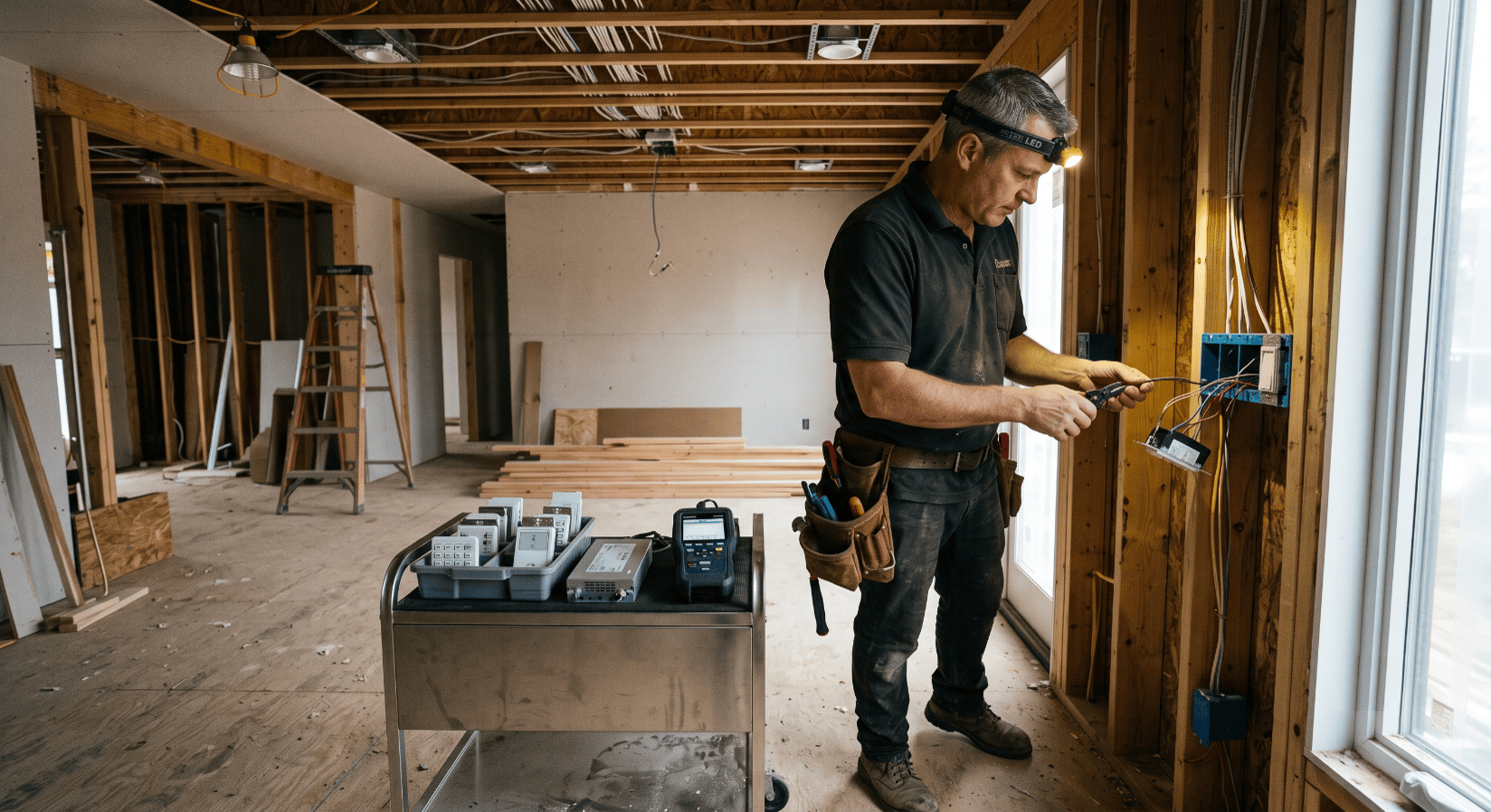 The manufacturers exhibiting at CEDIA are not abandoning their traditional channels. They are hedging. They see a customer, the custom integrator, the AV contractor, the smart home dealer, who is ready to buy, install, and support a complete lighting system, set against a specification-side channel that is not structured to support that same workflow. The integrator wants a system they can commission. The specification channel offers a product they can spec. The manufacturer goes where the capability already lives.
This creates an uncomfortable overlap. In markets where both a specification-side relationship and a custom integration dealer are active; the same manufacturer’s products may be available through both paths at different price points with different levels of technical support. The integrator delivers a commissioned system with ongoing service. The specification side delivers a spec with a submittal package. The end client increasingly wants the former.
The response to this convergence across architectural lighting has been slow. Some organizations have added integration staff. A few have built real commissioning capability. But wherever compensation is still tied to product shipment rather than systems delivery, there is little structural incentive to make that investment, and the CEDIA channel will keep pulling systems-driven business away, one project at a time.
This is not theoretical. It is happening on trade show floors, in manufacturer boardrooms, and in the residential and light commercial projects where lighting and AV integration are becoming inseparable. The rest of the lighting channel can build the same commissioning depth the integration world already has or watch that business move to the people who already built it.”

Thoughts?
- What do you think about Bruno’s thoughts?
- What do you think about manufacturers selling direct to this channel?
- Did you know that some electrical manufacturer representatives have divisions that cater to this market? And if they are successful with this channel, is there any reason why they shouldn’t be able to represent other electrical lines that do not sell through distribution?
- If the controls market, be it overall controls usage, connected systems, smart lighting, or whatever terminology you choose, is to grow, perhaps opening a more “transparent”, or direct, channel may be effective for manufacturers. As contractors become more lighting self-sufficient (hence design/build offerings and control commissioning solutions, perhaps they could be specifying and purchasing direct from manufacturers? Would the incremental margin, or direct access to manufacturers, make this a growth opportunity for them?
- Which then begs the question of the role of specifiers in some instances. It would make everyone define, and deliver, their value.
Perhaps heresy, perhaps channel evolution.

Trending Now

Controlling Technology Expenses

What CEDIA Already Knows About Systems Delivery
You may also like


